 How-to
Tips for Outdoor Wedding Photography 2026
Last Updated: November 7, 2026
Quick Summary
Successful outdoor wedding photography starts with a baseline of Aperture Priority at f/2.8 to f/4, ISO 100 to 400, and a minimum shutter speed of 1/250 second for candids and moving subjects. In harsh sunlight, move the couple into open shade, turn their backs to the sun for backlighting, or wait for a cloud, and spot-meter the brightest part of the face.
- Drop to 1/125 second only for still portraits on a tripod.
- Walk the ceremony site at the event's hour, since 2 p.m. light looks nothing like 6 p.m.
- Build a weather-proof timeline that names a rain backup plan and ranks must-have shots by priority.
- Assume the sun moves and the schedule slips at least 15 minutes.
- Place couple portraits in the hour before sunset using a sun-tracking app.
Table of Contents
- Best Camera Settings for Outdoor Wedding Photography
- How to Photograph a Wedding in Bright Sunlight Without Blown Faces
- Building a Wedding Photography Timeline and Shot List That Survives Weather
- A Lighting Decision Tree for Any Weather
- Post-Processing Mixed and Difficult Natural Light
- Frequently Asked Questions
Best Camera Settings for Outdoor Wedding Photography
Great outdoor wedding photography starts with settings you can trust when light changes fast. Lock in a baseline before the ceremony: Aperture Priority at f/2.8 to f/4, ISO 100 to 400, and a minimum shutter speed of 1/250 second for candids and moving subjects; drop to 1/125 second only for still portraits on a tripod. When scouting, contact the venue to schedule a tour and walk the ceremony site at the event's hour, 2 p.m. light looks nothing like 6 p.m. Browse more practical how-to guides too.
How to Photograph a Wedding in Bright Sunlight Without Blown Faces
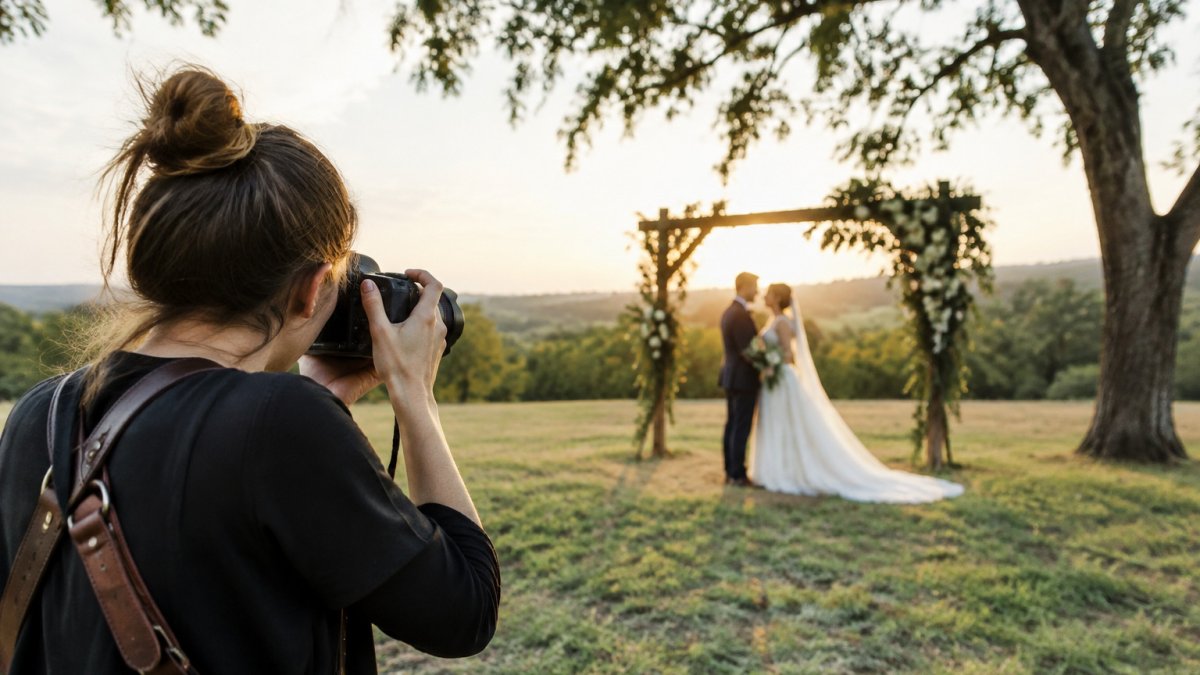
The fix for harsh sunlight is simple: get the couple into open shade, turn their backs to the sun for backlighting, or wait for a cloud.
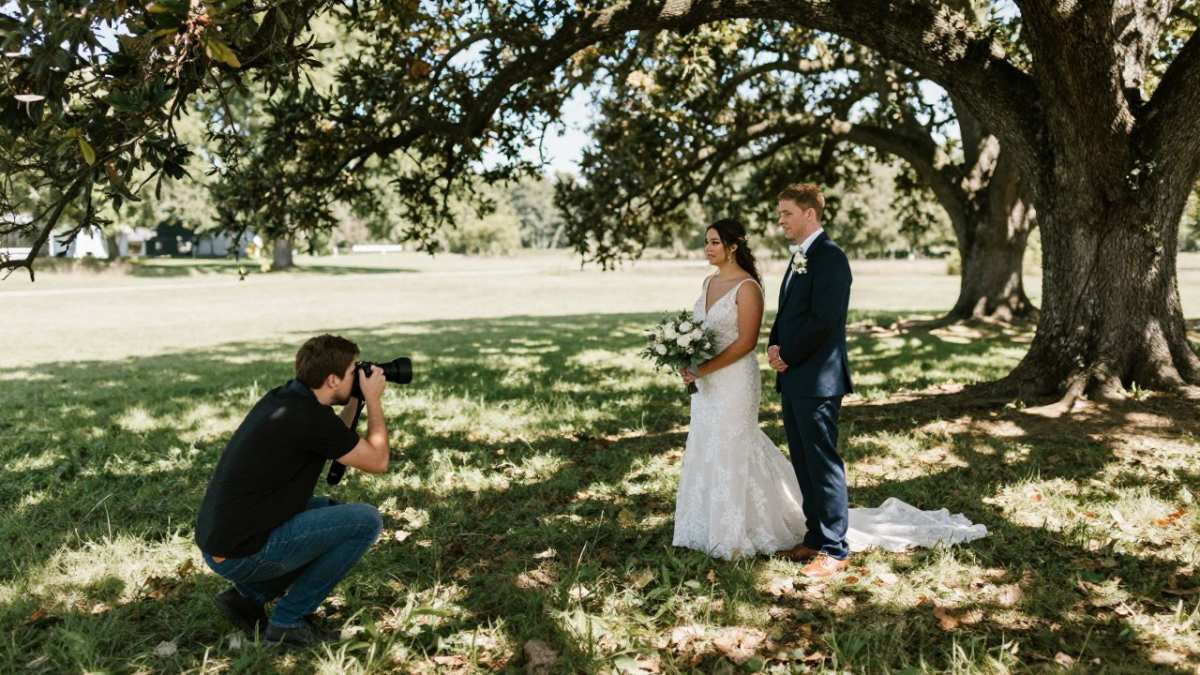
Spot-meter the brightest part of the face; slight highlight recovery in editing is fine, a blown-out face is not. Chasing the "perfect" full-sun portrait burns ceremony time and produces squinting, shadowed photos, so move to shade early. Our Texas Hill Country wedding style guide covers the colors, attire, and outdoor details that shape how portraits read on camera.
Building a Wedding Photography Timeline and Shot List That Survives Weather
A weather-proof timeline builds in buffer, names a rain backup plan, and lists must-have shots in priority order, assuming the sun moves and the schedule slips at least 15 minutes. Use a sun-tracking app to note golden hour and sunset, then place couple portraits in the hour before sunset.
| Time Block | What Happens | Light Condition |
|---|---|---|
| 2 hours before ceremony | Detail shots, getting ready | Indoor or shade |
| Ceremony | Vows, ring exchange, candid photos | Whatever the sky gives |
| 1 hour before sunset | Couple portraits, backlighting | Golden hour |
Rank the shot list by priority: if rain cuts portraits short, you still capture the ceremony, family formals, and one hero couple shot. Ask the venue where indoor ceremony photos happen and how fast guests can move inside. Our guide on how to build an outdoor wedding rain backup plan covers the questions and timing; our wedding venue FAQ covers ceremony options, weather, and setup.
A Lighting Decision Tree for Any Weather
Secure veils, light stands, and loose decor before the ceremony, a veil whipping across a face ruins a candid faster than bad light ever will.
Post-Processing Mixed and Difficult Natural Light
Editing fixes small exposure gaps, not blown highlights. Shoot for clean face exposure in camera, then batch-edit white balance and adjust face exposure per image. Keep skin tones natural across complexions; avoid heavy global contrast presets that crush deeper skin tones or wash out fair ones.
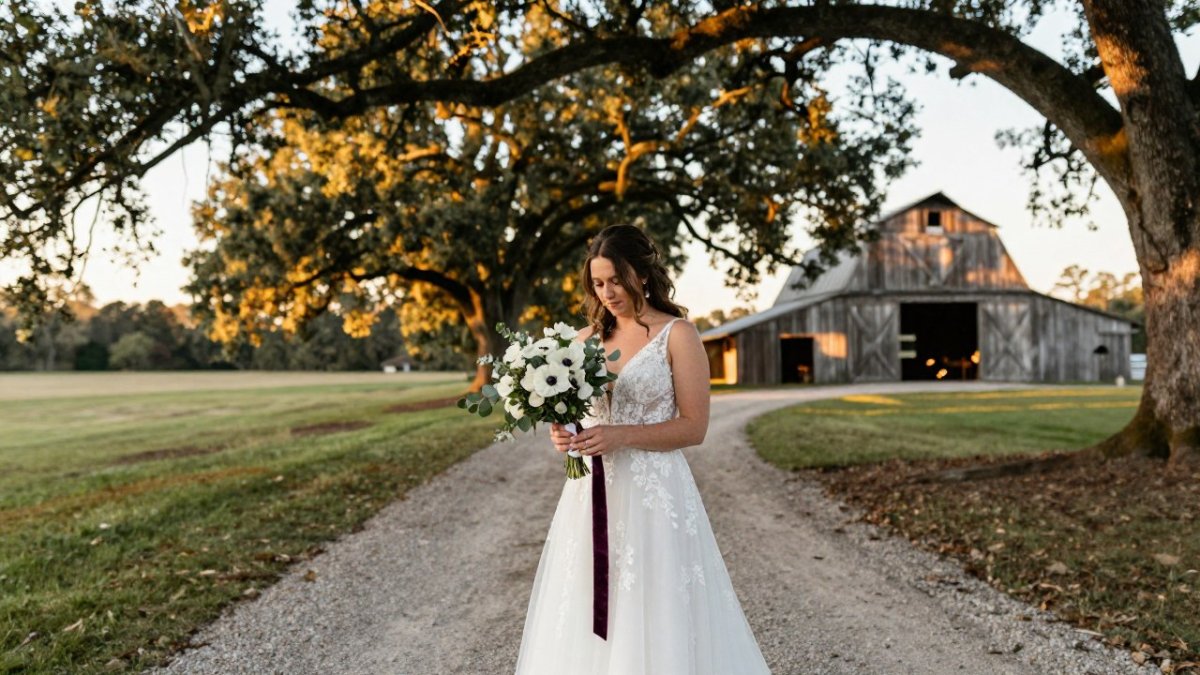
Outdoor light rewards preparation, and the right venue makes the job easier. Five Oaks Farm offers mature oak trees for open shade, open countryside for golden hour backdrops, and versatile indoor and outdoor spaces if weather turns. Couples and photographers get a Hill Country feel with a real backup plan built in. Get started with Five Oaks Farm and give your wedding photos the setting they deserve.
Frequently Asked Questions
What is the best time of day for outdoor wedding photos?
Golden hour, roughly the hour after sunrise or before sunset, gives the softest light and warm glow for outdoor wedding photography. Midday sun creates harsh shadows and squinting faces, so schedule portraits for early evening when possible. If your ceremony falls at noon, plan portraits in open shade under trees or a covered structure, and save couple portraits for the last hour of daylight before sunset.
How do you photograph an outdoor wedding ceremony in harsh light?
Position the couple so the sun is behind or to the side of them, then expose for their faces rather than the bright background. Use a shutter speed of at least 1/250 second to avoid motion blur during the kiss and processional, and shoot in open shade whenever the venue offers it. A sun-tracking app helps you predict where shadows will fall during the ceremony, so you can plan camera positions in advance.
How can couples prepare for rain during an outdoor wedding?
Build a backup plan into the wedding photography timeline: confirm the venue's indoor ceremony space, keep clear umbrellas on hand for portraits, and tell your photographer the rain call time. Ask the venue how quickly guests can move indoors.