 How-to
How to Build an Outdoor Wedding Rain Backup Plan
Last Updated: October 31, 2026
Quick Summary
A rain backup plan starts with your venue: ask in writing where the indoor backup space is, how many guests it seats, who decides to move indoors, and by what time. Name one decision authority, set a single hard deadline, and set severe-weather thresholds that trigger an automatic move.
- Confirm in writing two weeks out that the indoor backup space is held for your date.
- Set one hard decision deadline, ideally the morning of the event, and protect it.
- Any thunder heard or lightning seen within the venue's safety radius means guests move indoors.
- Confirm the indoor backup space has step-free access and enough aisle width for wheelchairs.
- Five Oaks Farm offers versatile indoor and outdoor spaces with a Modern Farmhouse design.
Table of Contents
- Start With the Right Questions to Ask Your Wedding Venue About Rain
- Weigh Your Outdoor Wedding Ceremony Backup Options
- Build a Wedding Rain Plan Timeline From Two Weeks Out to the Morning Of
- Handle Rain Plan Communication With Guests Before and During the Event
- Prepare the Grounds, Rentals, and Safety Thresholds for Wet Weather
- Lock In Your Rain Backup Plan With Five Oaks Farm
- Frequently Asked Questions
Start With the Right Questions to Ask Your Wedding Venue About Rain
An outdoor wedding venue rain backup tips list that works starts with one hard truth: the plan belongs to the venue before it belongs to you. A rain backup plan is only as good as the answers your venue gives before you sign.
Ask these questions in writing, and ask them on the tour, not after the deposit:
- Where exactly is the indoor backup space, and how many guests does it seat?
- Does the backup space match the look you're paying for, or does it feel like a plain hall?
- Who makes the call to move indoors, and by what time?
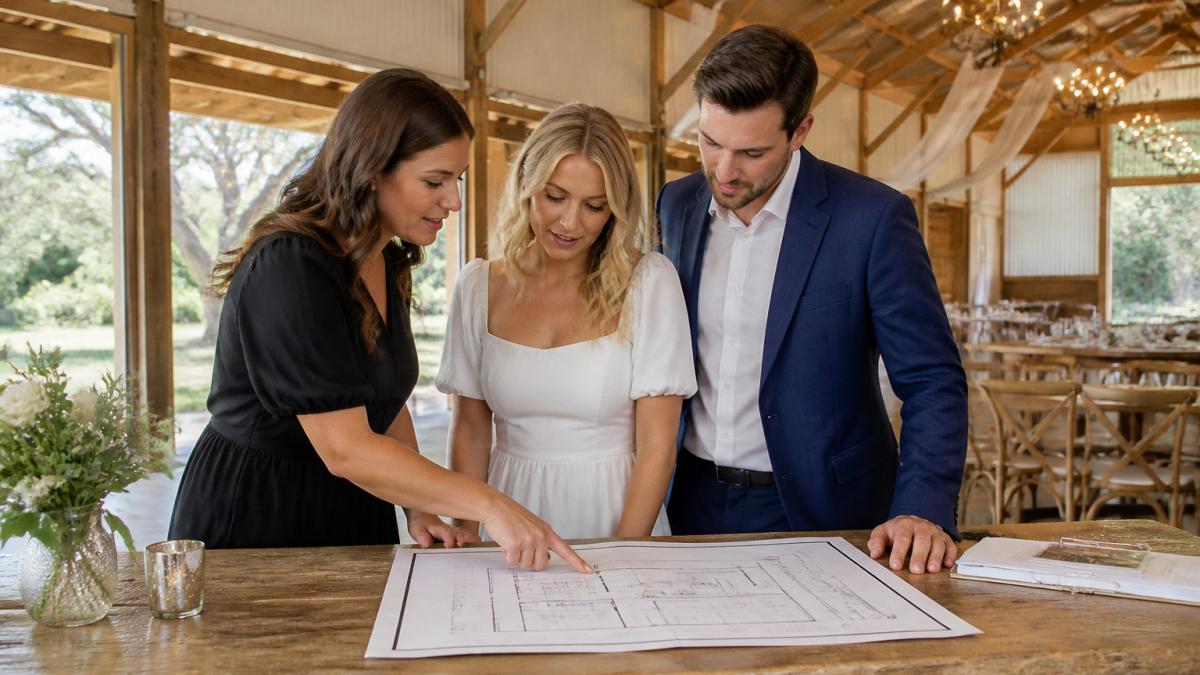
Get those answers and you've done half the work. For the venue's own answers on weather, ceremony options, and rentals, review the Wedding Venue FAQ.
Weigh Your Outdoor Wedding Ceremony Backup Options
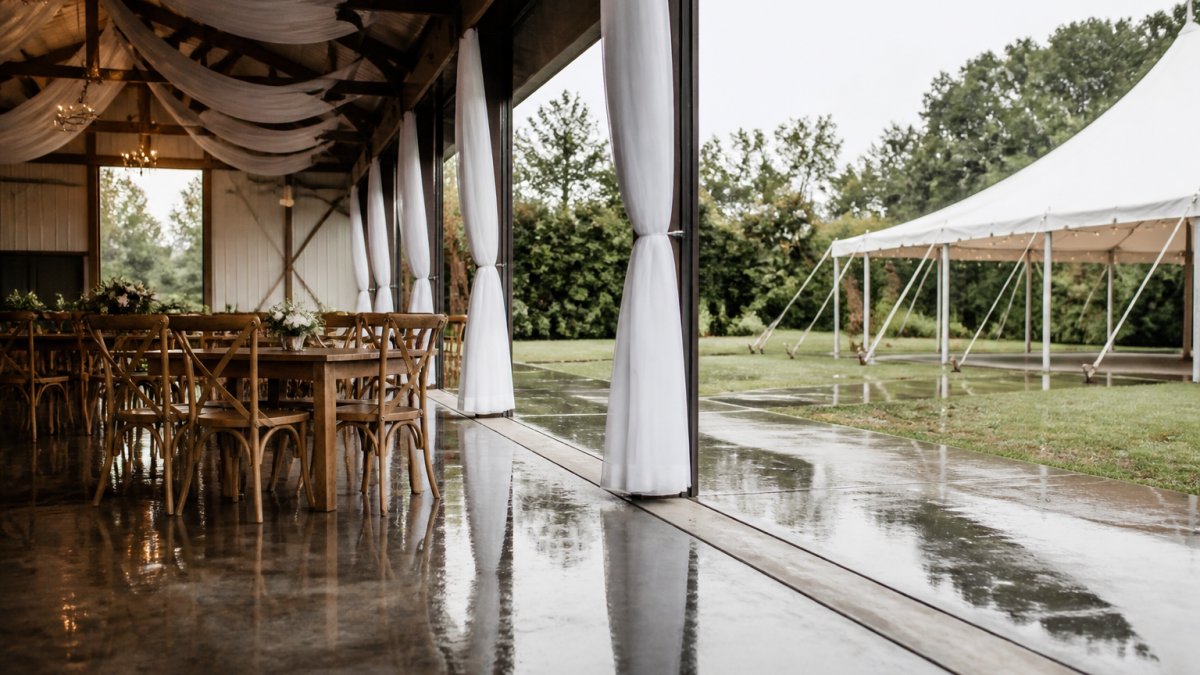
Outdoor wedding ceremony backup options generally fall into a few categories, each offering a different level of certainty. The right pick depends on guest count, budget, and weather tolerance.
Here's how the three options compare:
| Option | Best For | Main Trade-Off |
|---|---|---|
| Indoor backup space at the venue | Small to mid-size guest lists | Fewer seats than an open lawn |
| Covered space or covered walkway | Ceremonies that need to stay outside | Limited capacity, wind exposure |
| Tent rental with sidewalls | Large guest counts | Cost, setup time, and rental availability |
Build a Wedding Rain Plan Timeline From Two Weeks Out to the Morning Of
A wedding rain plan timeline removes the guesswork. The goal is to make the call early enough that vendors, rentals, and guests move with you. The couples who stay calm wrote down who decides, when they decide, and what triggers the decision before wedding week.
Name the decision authority before the timeline matters
Before you build the schedule, settle one question in writing: who has final authority to move the ceremony? Common patterns are the venue coordinator, the planner, or a designated family member, with the couple consulted but not required to make the call mid-event. Put that name in your vendor contracts and guest communication. A timeline without a named decision-maker turns into a group chat at the worst possible moment.
The go/no-go schedule
Use this schedule, and adjust the times to match your venue's setup window:
-
Two weeks out: Confirm in writing that the indoor backup space is held for your date and no other event can claim it.
-
Seven days out: Check the forecast daily. Flag rain risk to your venue coordinator and planner so they can pre-stage the move. Ask the rental company its cutoff for a weather-related change.
-
Forty-eight hours out: Hold a short call with the venue, planner, and officiant. Confirm the backup space, covered route, setup start time, and decision deadline. Send the guest communication now.
-
Morning of, at the decision deadline: The named authority makes the call. Once made, the move starts immediately and is not revisited.
-
Two hours before: Confirm the final ceremony location with the officiant, vendors, and the person fielding guest questions.
Branch the timeline by rain scenario
Treating all weather alike is the most common timeline mistake. Build a decision for each scenario:
- Light showers, no wind: Keep the ceremony outdoors if the ground drains and the covered route is dry. Add umbrellas, drying mats, and a towel station. Decide at the morning deadline.
- Sustained rain: Move to the covered space or tent with sidewalls. Flooring under the tent and along the guest route becomes mandatory. Decide the evening before if the forecast is consistent.
- Storms, lightning, or high wind: Abandon the outdoor setup automatically. No debate, no waiting for the deadline. Move indoors and keep guests out of the tent until the venue or planner clears it.
Set one hard deadline and protect it
Set one clear decision deadline with your venue, ideally the morning of the event. Past that point, moving chairs, rentals, and décor takes too long to do safely. Write it into the vendor contracts and repeat it in the guest communication so no one is surprised when the call goes one way or the other.
Handle Rain Plan Communication With Guests Before and During the Event
Rain plan communication with guests should start before they pack their bags. A single clear message beats ten panicked texts.
Send a short note a few days before the wedding that covers:
- The ceremony location and the backup location
- What to wear and bring, like rain gear and umbrellas
- Where to park and how to reach the covered route
On the day itself, post one update where everyone already checks, like a group text or a sign at the entrance. Ask a family member or planner to field questions so you're not answering your phone in your dress.
Prepare the Grounds, Rentals, and Safety Thresholds for Wet Weather
Wet ground is the part most rain plans ignore. Muddy ground and slippery paths cause falls, and no amount of décor fixes a soaked walkway. Bringing umbrellas alone is not enough; the operational work is in the thresholds, surfaces, and routes that keep every guest safe.
Prep the grounds and rentals
Work through this checklist with your venue and rental company:
- [ ]
- Add flooring under the tent and at the ceremony site, rated for the guest count
- Set out umbrellas and a spot for wet outerwear
Set severe-weather thresholds, not just rain thresholds
Rain is often not the main concern. Lightning, high wind, flooding, and unsafe ground are the conditions that should end an outdoor setup, and they should trigger an automatic move with no debate. Set the thresholds with your venue and planner in advance and write them into the plan:
- Lightning: Any thunder heard or lightning seen within the venue's safety radius means guests move indoors and stay there until the venue or planner clears the area. The National Weather Service severe weather safety guidance is a good reference for when to call it.
- High wind: Gusts above the tent's rated limit mean sidewalls come down or the tent is evacuated. Ask the rental company for the rating and the evacuation procedure.
- Flooding and standing water: Any standing water on the guest route or ceremony site means the outdoor setup is abandoned, regardless of the forecast.
Make the backup plan accessible for every guest
Accessibility is the gap most rain plans miss. A covered route and firm flooring keep guests with mobility needs moving safely and dry, but only if you plan them in advance:
- Confirm the indoor backup space has step-free access and enough aisle width for wheelchairs and walkers
- Map a covered route from parking to the ceremony and reception spaces, and confirm it is firm, drained, and lit
- Reserve seating near the aisle and exits for guests with mobility needs
Lock In Your Rain Backup Plan With Five Oaks Farm
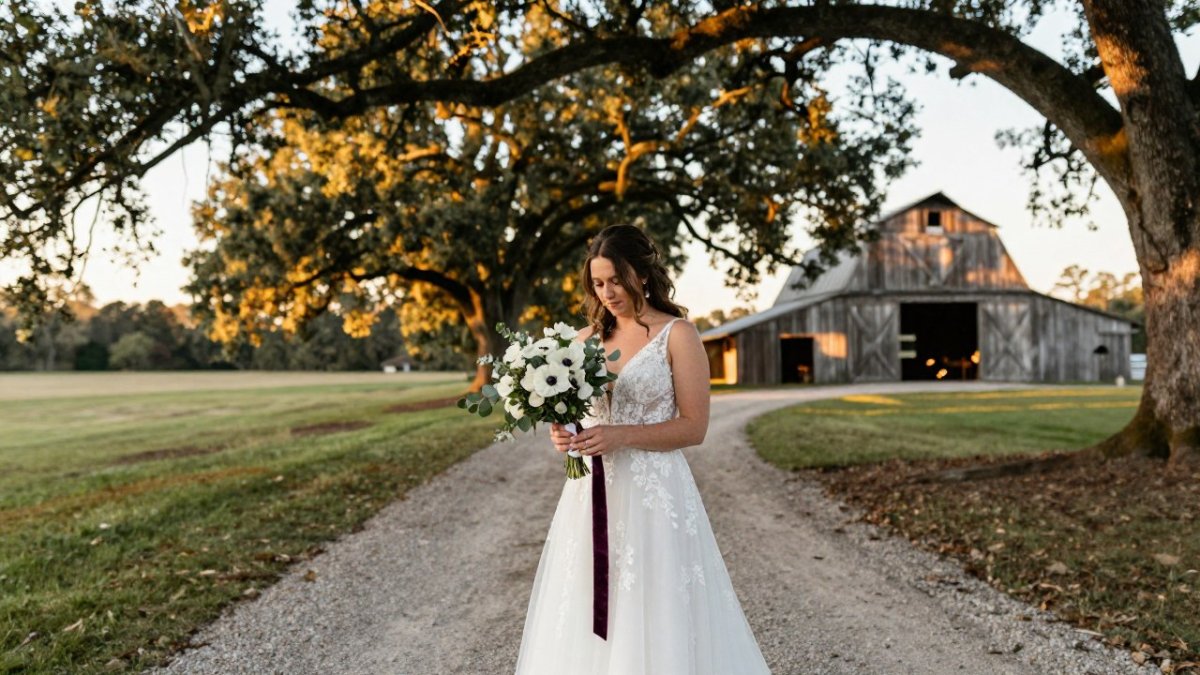
The best rain backup plan is the one you never have to scramble for. Five Oaks Farm offers versatile indoor and outdoor spaces, with a Modern Farmhouse design and mature oak trees as its scenic backdrop.
Here's how we'd lock it in: review Five Oaks Farm's pricing page for current pricing and what each option includes, then contact the team to schedule a tour and walk the backup space yourself. Confirm the details before the deposit, not after.
Frequently Asked Questions
What should an outdoor wedding rain backup plan include?
A complete rain backup plan covers four things: a confirmed indoor or covered space, a written decision timeline with a go/no-go deadline, a guest communication method, and wet-weather supplies like umbrellas and drying mats. It should also name who has the authority to call the switch, usually the couple with the venue coordinator. Put the plan in writing and share it with every vendor so no one is guessing when the forecast turns.
When should you decide whether to move an outdoor wedding indoors?
Most venues and planners set a decision deadline 24 to 48 hours before the ceremony, based on the National Weather Service forecast. For light, passing showers you may wait until the morning of. For thunderstorms, high wind, or lightning within a set radius, move earlier. Decide the trigger in advance so the call is automatic rather than emotional, and give vendors enough notice to shift setup logistics.
What are the best backup options for an outdoor wedding ceremony?
A permanent indoor space at your venue is often the simplest option when it fits your guest count. A tent rental with sidewalls and flooring gives more room and is best booked well ahead. A covered walkway or patio can work for small ceremonies. Confirm capacity, power for heaters or lighting, and how long setup takes, because a tent that goes up in six hours will not save a same-day decision.
How can you keep guests comfortable and safe if it rains at an outdoor wedding?
Plan for wet ground and slippery paths first. Add flooring or walkway mats, place umbrellas at entrances, and plan a covered route between the ceremony and reception so guests stay dry. Set up a drying station with towels and a place for wet outerwear. For accessibility, keep a firm, level path for wheelchairs and guests with limited mobility. If lightning is in the forecast, move everyone indoors well before the storm arrives.
Your rain plan is only as strong as the space behind it. Five Oaks Farm pairs versatile indoor and outdoor spaces with a Hill Country feel, so a wet forecast never costs you the setting you chose. Get started with Five Oaks Farm and build a backup plan that keeps your day comfortable and dry.