 How-to
7 Steps to Plan Your 2026 Outdoor Wedding Reception
Quick Summary
Plan an outdoor wedding reception by working backward from your date, starting with the venue and its outdoor rules about 12 months out. Then set a weather backup plan with a firm decision deadline, and build an itemized budget with a 10%-15% contingency reserve.
- Book your venue and confirm its outdoor rules about 12 months out.
- Set weather thresholds, such as a 50% rain chance at the 48-hour mark, and name one decision-maker.
- Hold a 10%-15% weather contingency reserve as its own budget line, not spendable décor money.
- Confirm permits for temporary events, amplified sound, open flame, and tents well before the event.
- Get written vendor quotes that include tax, delivery, setup, and the reschedule policy.
Table of Contents
- Outdoor Wedding Reception Planning 2026: Start With the Timeline
- Step 1: Choose a Venue and Confirm Its Outdoor Rules
- Step 2: Build an Outdoor Wedding Weather Contingency Plan
- Step 3: Plan Shade, Heat and Guest Comfort
- Step 4: Design Outdoor Wedding Lighting Ideas That Work After Dark
- Frequently Asked Questions
Outdoor Wedding Reception Planning 2026: Start With the Timeline
Last Updated: November 11, 2026
Planning an outdoor wedding reception in 2026 takes more time than most couples expect. Setting your timeline first, then picking the venue, backup plan, and budget around it, is a sound way to keep planning manageable.
Here is a simple way to start. Pick your date, then list the decisions that depend on it, from venue booking to rental delivery.
Month-by-Month Planning Timeline for 2026
Many couples plan for about 12 months for a full outdoor reception, and start sooner for spring and fall dates. Use this rough schedule as a guide:
- 12 months out: Book your venue and confirm its outdoor rules.
- 9 months out: Hire your caterer, photographer, and any rental company.
- 6 months out: Finalize your weather backup plan and tent or shelter order.
- 3 months out: Lock in your lighting, sound, and power setup.
- 1 month out: Confirm headcount, seating, and the final timeline with every vendor.
- 1 week out: Check the forecast and walk the site with your planner.
Popular June and October dates fill fast, so do not wait on the venue decision.
Step 1: Choose a Venue and Confirm Its Outdoor Rules
Choose a venue that has both outdoor space and a usable indoor backup. Ask what happens to the reception if rain hits, because not every outdoor site offers this.
Ask these questions before you sign:
- What outdoor areas can we use for the ceremony and reception?
- Can we bring in our own caterer or florist?
- Are there noise limits or quiet hours after a set time?
- What are the rules for open flame, candles, and lanterns?
- Is there a power supply, or do we need a generator?
- Who handles parking and guest directions?
Get the answers in writing. Verbal promises about outdoor use are easy to forget once the contract is signed.
Watch out: Many couples assume a venue's photos show the full outdoor layout.
Step 2: Build an Outdoor Wedding Weather Contingency Plan
Every outdoor wedding needs a plan for rain, wind, and extreme heat. A weather backup plan keeps your guests comfortable and your timeline on track. A plan that holds up is one where the trigger, the decision-maker, and the order in which people get told are all written down.
Start by deciding when you will switch to the backup. You can learn more about how to weigh your options in our guide on how to build an outdoor wedding rain backup plan. For a broader look at choosing between formats, read 7 questions to choose between indoor and outdoor weddings.
Set Weather Thresholds, Not Just a Deadline
A deadline tells you when to decide. A threshold tells you what you are deciding about. Write both down and share them with every vendor. A common pattern among experienced planners is to use thresholds like these:
- Rain probability: If the National Weather Service forecast for your reception window shows a 50% or greater chance of measurable rain at the 48-hour mark, activate the indoor or tented backup. Between 30% and 50%, hold the outdoor plan but pre-stage the tent sidewalls and move fragile décor under cover.
- Sustained wind: If sustained winds are forecast at 20 mph or higher, or gusts at 30 mph or higher, plan to strike tall centerpieces, loose linens, and unweighted signage, and confirm with your tent vendor whether sidewalls and staking are rated for those gusts. Tent manufacturers publish wind ratings, ask for yours in writing.
- Heat: If the forecast high is 95°F or above, or the heat index is 103°F or above, shift the ceremony later, add misting stations, and confirm that the indoor backup has working air conditioning rather than fans alone.
- Lightning: Any thunderstorm in the forecast within 10 miles of the site during the reception window is an automatic move indoors. Do not wait to see lightning.
Name the Decision-Maker and the Decision Time
Ambiguity is what turns a backup plan into a scramble. Assign one person, usually the planner or a designated family member, not the couple, to make the call. Put the decision time in writing, for example 10:00 a.m. two days before the event, with a second check at 10:00 a.m. the day before. The decision-maker reviews the National Weather Service forecast, calls the venue and tent vendor, and then triggers the communication sequence below.
Build a Responsibility Matrix
Write down who does what when the backup is triggered. A simple matrix covers most receptions:
| Task | Owner | When |
|---|---|---|
| Review forecast and make the call | Planner or designated decision-maker | 48 hours and 24 hours out |
| Confirm indoor space or tent sidewalls | Venue contact and tent vendor | Within 1 hour of the call |
| Notify caterer of layout change | Couple or planner | Same day as the call |
| Text or email guests about the change | Couple, using the wedding website or a group message | Same day as the call |
| Redirect florist and rental deliveries | Planner | Morning of the event |
| Walk the backup space and test power and lighting | Planner and venue | Day before and morning of |
Write the Guest Communication Plan
Guests need one clear message, sent once, through a channel they already check. A short update on your wedding website plus a group text to the wedding party and immediate family, who then relay to their circles, is one common pattern. Keep the message to three lines: what changed, where to go, and what time. Do not send it more than 24 hours before the event unless the forecast is unambiguous, because forecasts shift and a premature message creates confusion you then have to correct.
Tent, Shelter and Indoor Backup Decisions
A tent gives you protection without moving the event. Compare these options:
| Option | Best For | Main Trade-Off |
|---|---|---|
| Clear-top tent | Rain protection with views | Can trap heat on sunny days |
| Solid-top tent | Full weather cover | Less natural light |
| Indoor backup space | Severe weather | Needs a clear move-in plan |
Ask your venue how long a move indoors takes. Plan for guests to walk, not run, to the indoor space, and give yourself a clear decision time.
Watch out: A verbal "we'll figure it out if it rains" from a venue is not a backup plan. Get the indoor space, the move-in window, and any additional fee for using it confirmed in the contract before you book.
Step 3: Plan Shade, Heat and Guest Comfort
Summer heat is a real concern in Texas, and comfort affects how guests feel about the whole day. Plan for shade before you plan for décor.
Build these comfort basics into your reception:
- Shaded seating areas with fans or misting units
- Cold water stations placed at several points around the site
- Restrooms within a short walk of the reception area
- Seating with backs and cushions for older guests
- Wind protection for candles, linens, and place cards
Schedule the most active parts of the reception for cooler hours. Move the cake cutting and first dances to early evening when the sun drops.
Step 4: Design Outdoor Wedding Lighting Ideas That Work After Dark
Lighting shapes the mood of an outdoor reception after sunset. Good lighting makes the space feel warm and guests feel safe.
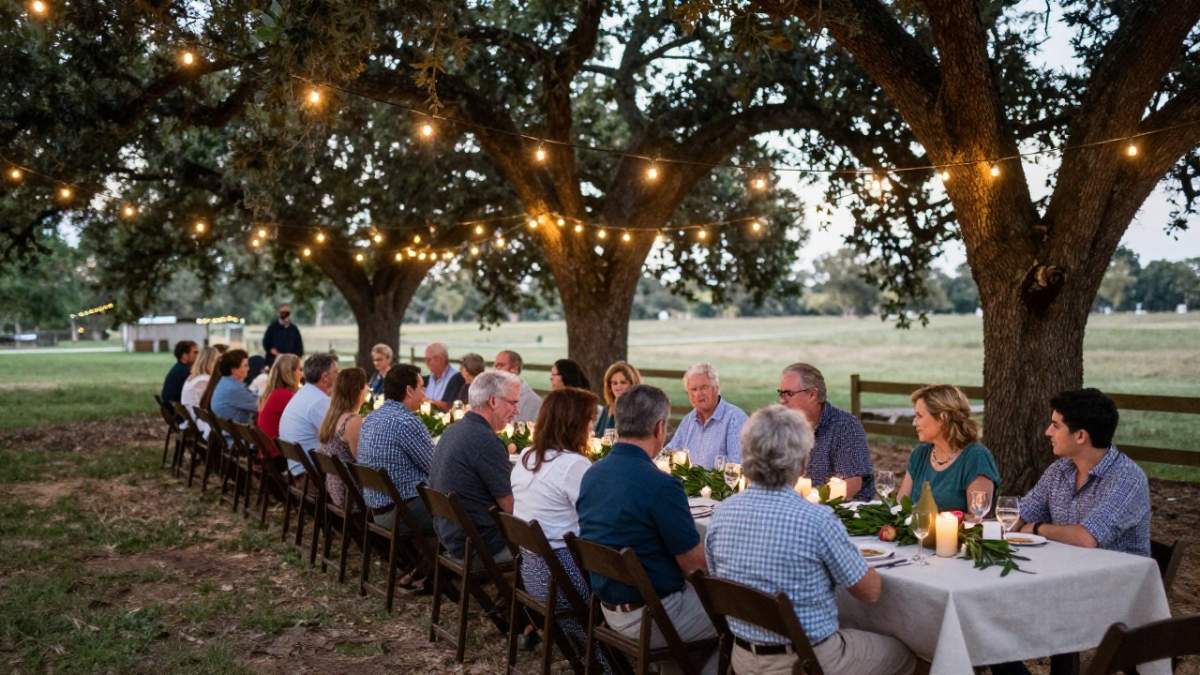
Layer your lighting in three ways:
- Overhead: String lights between trees or posts to set the main glow.
- Table: Use candles in glass hurricanes or battery-powered lanterns.
- Pathway: Mark walkways and restroom routes so guests do not trip.
Test every light the day before. Check power needs, because string lights and sound systems can overload a single circuit.
Venue booked with outdoor rules confirmed in writing- Weather backup plan and decision deadline set
- Tent or shelter ordered
- Shade, water, and restroom plan in place
- Lighting and power tested
- Itemized budget with written vendor quotes
- Permits and insurance confirmed
Once your checklist is complete, you are ready to move from planning to celebrating. Five Oaks Farm offers both indoor and outdoor spaces near Cleburne, and the team can walk you through your options. Explore our wedding FAQ to see answers about vendors, timing, and parking before you visit.
Frequently Asked Questions
What are the most important items on an outdoor wedding reception checklist?
Start with the venue's outdoor rules, a weather backup plan, shade and seating for guests, lighting and power for evening hours, restrooms and parking, and a signed contract that spells out vendor and rental responsibilities. Confirm the rain location, tent sizing and generator needs at least 90 days out, then build a final walkthrough checklist for the week of the wedding. Keeping these items in one shared document helps your planner and caterer stay aligned.
How do you plan for weather contingencies at an outdoor wedding?
Choose a backup space that can hold your full guest count, so the switch is comfortable for everyone. Ask the venue how quickly the indoor area can be set up, and decide on a clear trigger time, such as 48 hours out, for when you will commit to the backup. Rent or reserve tent options in advance, and plan for wind, heat and lightning as well as rain.
How much should I budget for an outdoor wedding reception?
Pricing depends on guest count, date, rentals, catering style and how much of the setup the venue already includes. Ask for a written, itemized quote that separates venue rental, catering, rentals, lighting, tent costs and staffing, so you can see what is included and what is an add-on. Check Five Oaks Farm's website for current pricing or request a quote directly to compare accurately.
What lighting ideas work best for outdoor wedding receptions?
String lights overhead can create a warm canopy for dinner and dancing. Add uplighting to trees or the tent frame, and place lanterns or candles along tables and walkways for guest safety and atmosphere. Plan power access early, since string lights and lighting rentals depend on outlets or a generator, and test the full setup at dusk before the wedding day.