 Ultimate guide
Modern Farmhouse Venue Booking Guide for Texas Couples
Last Updated: November 12, 2026
Quick Summary
Start your modern farmhouse venue search as soon as you have a rough date range and budget, since popular Saturdays in peak season book up first. Settle a working guest count, tour your top choices, and compare total costs including deposits, service charges and overtime before signing.
- Start looking once you have a rough date range and budget, especially for peak-season Saturdays.
- Estimate guest count with a buffer, then check it against seated and standing capacity.
- Ask each venue to show its calendar several months on either side of your preferred date.
- Compare total cost across base fee, service charge, tax, deposit, overtime and cleanup.
- Read every contract line, focusing on deposit, cancellation terms and rescheduling fees.
Table of Contents
- When to Start Looking and How Far Ahead to Book
- Estimating Guest Count and Checking Venue Capacity
- Wedding Venue Booking Checklist: Step by Step
- Questions to Ask a Wedding Venue Before You Tour
- Wedding Venue Packages and What Is Typically Included
- Reading the Wedding Venue Contract Checklist Line by Line
- Planning for Weather, Indoor Backup Space and Guest Comfort
- Booking Your Tour at Five Oaks Farm
- Frequently Asked Questions
Booking a modern farmhouse venue is one of the first decisions couples make, and it's often the one that gets delayed the longest. Couples who wait until the guest list is final often discover that their preferred weekend is already taken.
Modern farmhouse venues are in high demand for a few clear reasons. They combine a rustic setting with clean, contemporary interiors, which appeals to couples across many styles. Many of them also offer both indoor and outdoor spaces, so a single booking can cover the ceremony, the reception and a backup plan for the weather.
Peak season in North Texas concentrates demand into a narrow window. Saturdays in the cooler months and the lighter spring and fall dates are the most competitive, and those are the dates couples tend to want.
A common mistake is assuming that a venue will still be open simply because you have not yet decided on a guest count or a color palette. Starting your search early gives you more options for both the date and the space itself.
Before you tour, it helps to understand how the booking process works from start to finish. The sections that follow cover when to start looking, how to estimate your guest count, what to ask a venue, and how to read a contract line by line. Each step builds on the last, so working through them in order keeps the planning manageable.
When to Start Looking and How Far Ahead to Book
Start looking as soon as you have a rough date range and a budget in mind, particularly if you want a Saturday during peak season. Earlier is generally safer for the most sought-after dates.
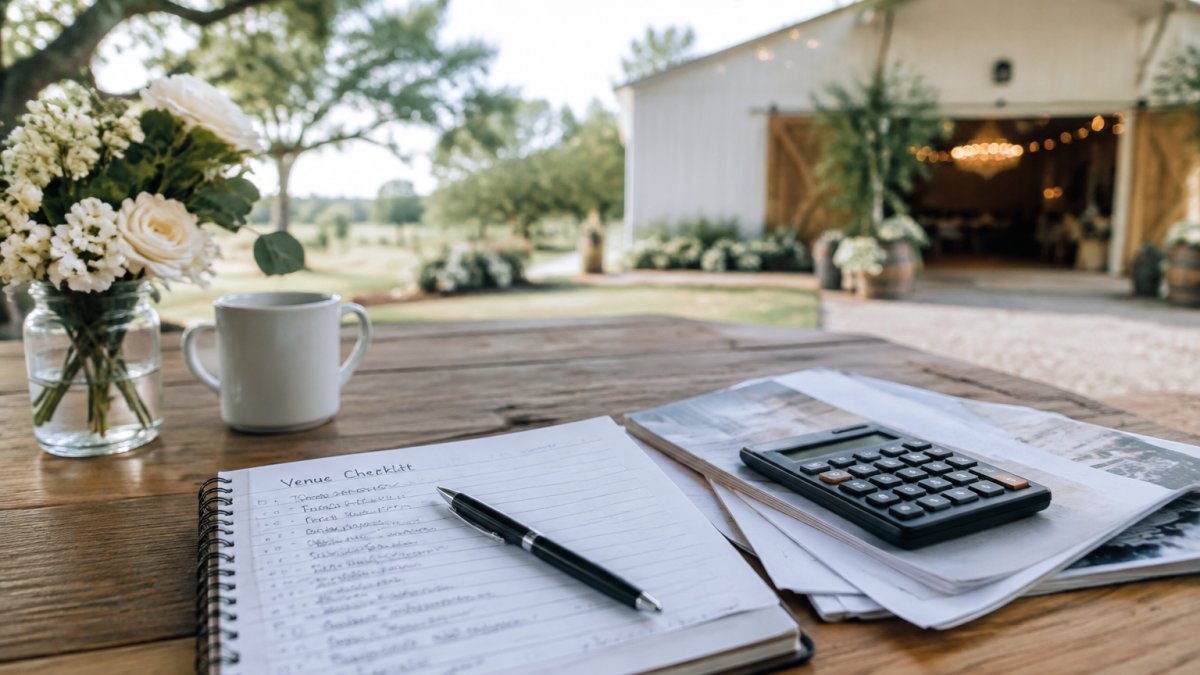
Build a simple timeline working backward from your wedding date. Set a target for touring venues, a target for choosing one, and a deadline for signing a contract and paying the deposit. Keeping these milestones on a shared calendar helps you and your partner stay aligned.
If your date is flexible, consider comparing different days of the week or seasons. Ask any venue you tour to show you its calendar for several months on either side of your preferred date, so you can compare options side by side.
Estimating Guest Count and Checking Venue Capacity
Your guest count drives most of the venue decision, so settle on a working number before you tour. Many couples start with a rough list of family and close friends, then add a buffer for plus-ones and invitations that may not be accepted. Treat this as an estimate you revisit, not a final figure.
Once you have a working number, check it against the venue's stated capacity for both seated and standing configurations. A space that holds 150 guests for a standing reception may fit far fewer at round tables with a dance floor. Ask the venue how they set up for the ceremony and reception separately, since the two often use different layouts.
We recommend walking any venue in person at your expected guest count. Seeing how the room feels with the number of tables you plan to use tells you more than any capacity figure on paper.
Wedding Venue Booking Checklist: Step by Step
Working through these steps in order keeps the process organized:
- Define your date range and must-haves. List your preferred dates, your budget range and any non-negotiable features such as indoor space or outdoor ceremony options.
- Estimate your guest count. Use a working number with a buffer, and note whether you need seated or standing capacity.
- Shortlist venues. Compare location, travel time for your guests and whether the aesthetic matches your vision.
- Check availability. Confirm your date and two or three alternatives before you tour.
- Tour your top choices. Bring your list of questions and take notes on each space.
- Compare packages and total costs. Look at what is included and what would be an add-on.
- Review the contract. Read every line before signing, paying attention to deposits and cancellation terms.
- Sign and pay the deposit. Confirm the payment schedule and get everything in writing.
Questions to Ask a Wedding Venue Before You Tour
Prepare your questions before you arrive so you cover the essentials on every visit. Useful questions include:
- Which dates are still available, and what is the deposit to hold one?
- What does the base package include, and what costs extra?
- Do you have a preferred vendor list, or can we bring our own caterer and florist?
- What is the indoor backup space like if it rains during the ceremony?
- What is the cancellation and rescheduling policy?
- Is there on-site parking, and how far is the venue from the nearest highway?
- What time do we have access to the space for setup and breakdown?
- Do you offer a day-of coordinator, and what does that role cover?
Asking the same questions at every tour makes it much easier to compare venues later.
Wedding Venue Packages and What Is Typically Included
Venue packages vary, and comparing quotes is easier when you understand what each one covers. Ask each venue to state exactly what its package includes before you compare prices.
The three common package structures.
What to confirm in a package. Because the appeal of a modern farmhouse venue is the finished look, confirm which items are part of the rental and which are upgrades. Ask specifically whether the venue owns its tables and chairs or subcontracts them, because that changes both cost and the vendor list you are allowed to use.
How to compare total cost, not headline cost. Build a single worksheet with one column per venue and rows such as these:
- Base rental fee for your date and guest count.
- Required service charge or administrative fee, usually stated as a percentage of the rental or catering total.
- State and local sales tax on the taxable portions.
- Deposit amount and due date.
- Payment schedule: how many installments, and when the final balance is due (commonly 30 to 60 days before the event).
- Security or damage deposit, and the conditions for its return.
- Overtime rate if your reception runs past the contracted end time.
- Cleanup fee, if the venue does not include it.
- Rental items the venue does not supply (linens, specialty chairs, dance floor, heaters, fans).
- Vendor fees: corkage, cake-cutting, or outside-caterer charges.
- Rehearsal or rehearsal-dinner access, if offered.
- Cancellation and rescheduling terms.
Payment schedules and deposits. Ask each venue how its deposit is calculated and whether it is refundable once the contract is signed. Ask whether the deposit is applied to the final balance or is a separate retainer.
Overtime, cleanup, and the costs couples forget. Ask about overtime billing before you sign, so you know your end time and can build the send-off into the timeline.
Watch out: a quote that does not state its service charge, tax treatment, overtime rate, and cleanup terms is hard to compare, so ask for those details in writing before you rank venues.
For current package details and pricing, visit the Five Oaks Farm pricing page or contact the venue directly for a quote tailored to your date and guest count. You can explore Five Oaks Farm wedding packages to see the indoor and outdoor options and what each one includes.
The article lists the main cost items to compare across venue packages:
| Cost item | What to confirm | Why it matters |
|---|---|---|
| Base rental fee | Price for your date and guest count | Starting point for comparison |
| Service charge | Stated as a percentage of rental or catering | Often added on top of the quote |
| Deposit | Amount and whether refundable | Due at signing |
| Final balance | Commonly 30 to 60 days before the event | Sets the payment schedule |
| Overtime rate | Billed if reception runs past end time | Build send-off into timeline |
| Cleanup fee | Included or billed as flat or hourly fee | Confirm what cleanup covers |
| Cancellation terms | Refund and rescheduling conditions | Affects total risk |
Reading the Wedding Venue Contract Checklist Line by Line
A venue contract sets the terms for your entire booking, so read it carefully before signing. Check the following:
- Deposit and payment schedule: How much is due at signing, and when are the remaining balances due?
- Cancellation policy: What happens to your payments if you cancel, and is any portion refundable?
- Rescheduling terms: Can you move your date, and what fees apply?
- Vendor policy: Are there restrictions on outside caterers, florists or DJs?
- Insurance requirements: Does the venue require event liability coverage?
- Access and timing: When can your vendors arrive, and when must the space be cleared?
- Included amenities: Confirm exactly what is listed and what is not.
If anything is unclear, ask for a written explanation before you sign. A reputable venue will walk you through the contract without hesitation.
Planning for Weather, Indoor Backup Space and Guest Comfort
Outdoor ceremonies are beautiful, but weather and guest comfort matter as much as the forecast.
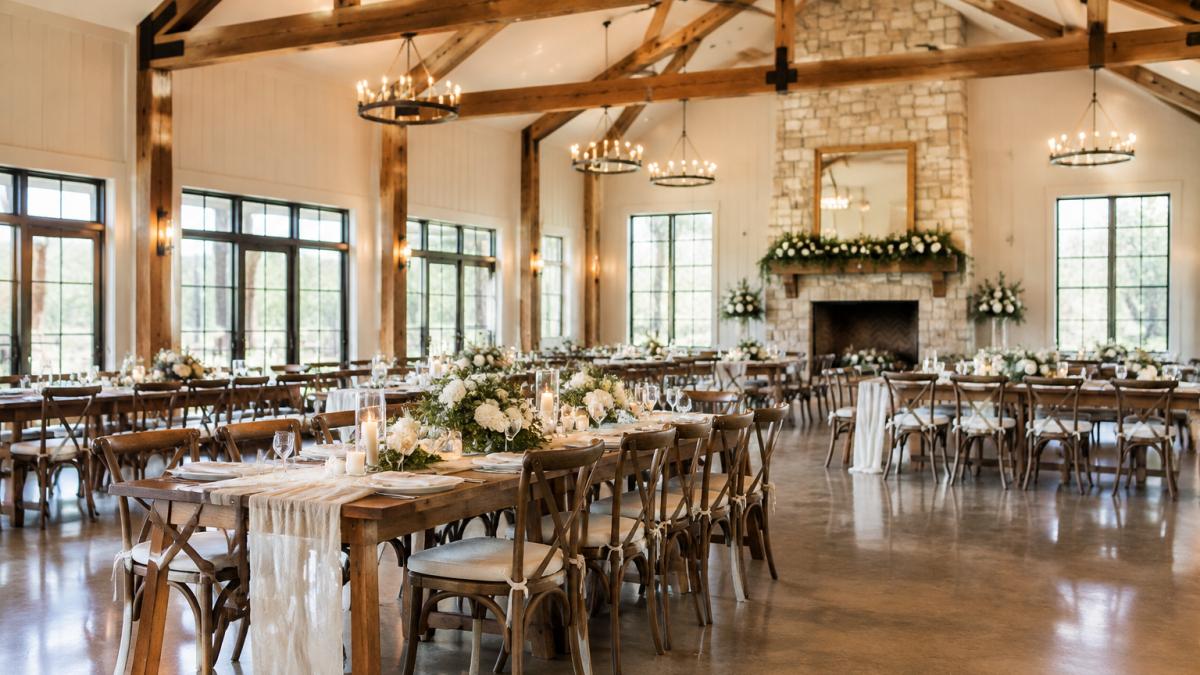
The backup-space test. Ask the venue to show you the indoor backup, not just describe it. Then confirm:
- How many guests the backup space seats at tables, not standing.
- How long the flip takes, and who performs it (venue staff or your vendors).
- Whether the backup space is the same room as the reception, which means the ceremony and reception cannot overlap in setup.
- Whether the backup space matches the aesthetic you chose, or whether it needs lighting and decor to feel finished.
- Who makes the call to move indoors, and by what time.
Severe-weather and power planning. Ask about the venue's plan for lightning, high wind, and extreme heat or cold, and whether the indoor space has backup power for lighting and climate control.
Accessibility checklist. Walk the route a guest with limited mobility would take from parking to the ceremony, to the reception, and to the restrooms. Confirm:
- Paved or firm, level paths rather than gravel or lawn for the primary route.
- A step-free entrance to the ceremony and reception spaces, or a stated ramp location.
- Accessible restrooms, and how many restrooms total are available for your guest count.
- Reserved parking near the entrance for guests with mobility needs.
- Seating with arms and back support for older guests, and shade or cover for outdoor seating.
Parking and arrival flow. Ask how many vehicles the lot holds, whether parking is paved or grass (which matters after rain), whether attendants are provided, and whether guests can be dropped at the entrance before the driver parks.
Climate and comfort. Confirm air conditioning and heating in the indoor spaces, ceiling fans or portable cooling for the barn, and whether heaters are permitted outdoors.
Noise, curfew, and neighbor considerations. Ask about the music curfew, sound limits, and whether an outdoor band or DJ is permitted after a certain hour.
Sustainability and operations. Ask how the venue handles trash and recycling, whether it composts or limits single-use items, and whether it has water and power conservation practices.
Watch out: a venue that cannot tell you the guest capacity of its indoor backup space or the time required to flip the room may not have planned for weather in detail, so ask before you commit.
Guest comfort matters as much as the forecast. Consider shade for an outdoor ceremony, seating for older guests, and climate control in both indoor and outdoor areas.
Booking Your Tour at Five Oaks Farm
The best way to decide is to see the space yourself. Schedule a tour at Five Oaks Farm to walk the indoor and outdoor areas, check the backup space, and ask your questions in person. Contact our Cleburne team to book your visit and see the setting with a Hill Country feel. Bring your guest count estimate and your preferred dates so we can show you realistic options.
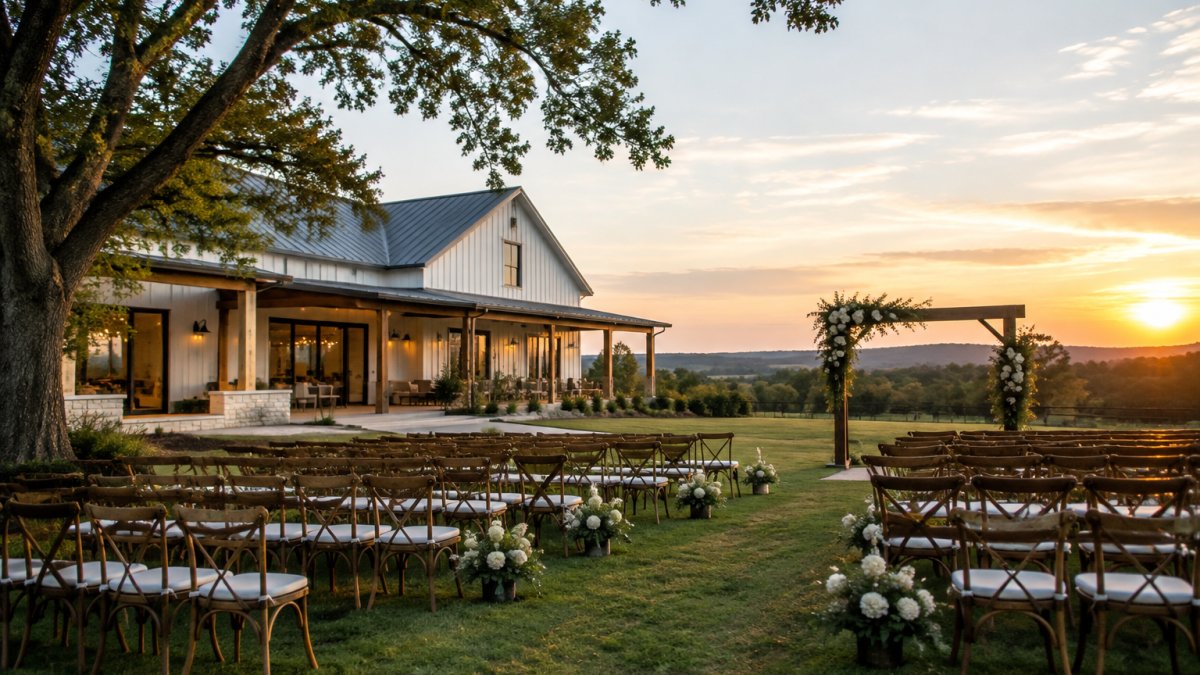
Five Oaks Farm offers a scenic backdrop, mature oak trees and versatile indoor and outdoor spaces. Reach out to our team to book your tour and start planning your celebration.
Frequently Asked Questions
How far in advance should you book a wedding venue?
Most couples should begin looking 12 to 18 months before the wedding date, especially for popular modern farmhouse venues in the DFW area that book quickly for spring and fall weekends. Off-season and weekday dates can sometimes be secured with less lead time. Check each venue's current availability on its website or by contacting the coordinator directly, and ask what deposit is required to hold your date.
What questions should you ask before booking a wedding venue?
Ask what is included in the base rental, how many guests the space comfortably holds, and whether the venue allows outside vendors such as caterers and florists. Confirm the indoor backup plan for rain, parking capacity, and how far guests will travel from Fort Worth or other DFW locations. Ask about the payment schedule, cancellation and rescheduling terms, and whether a day-of coordinator is available. Request references from past couples who married there.
What should a wedding venue contract include?
A solid venue contract lists the wedding date, rental hours, guest count, and the exact spaces included. It should spell out the deposit amount, payment schedule, and cancellation and rescheduling policies. Look for clear language on vendor policies, insurance requirements, setup and cleanup times, and any fees for overtime. Confirm what happens if weather forces a move indoors. Ask for every promise made during the tour to be written into the agreement before you sign.
What is usually included in a wedding venue package?
Packages vary widely, but many include exclusive use of the grounds for a set number of hours, tables and chairs, and access to indoor and outdoor spaces. Some add lighting, restrooms, parking, or a dedicated coordinator. Full-service packages may bundle catering and rentals, while partial coordination covers only planning support. Compare what is listed against your priorities, and ask in writing for any item that is not clearly described. Pricing depends on date, season and selections, so request a current quote from Five Oaks Farm.
How do you choose between indoor and outdoor wedding spaces?
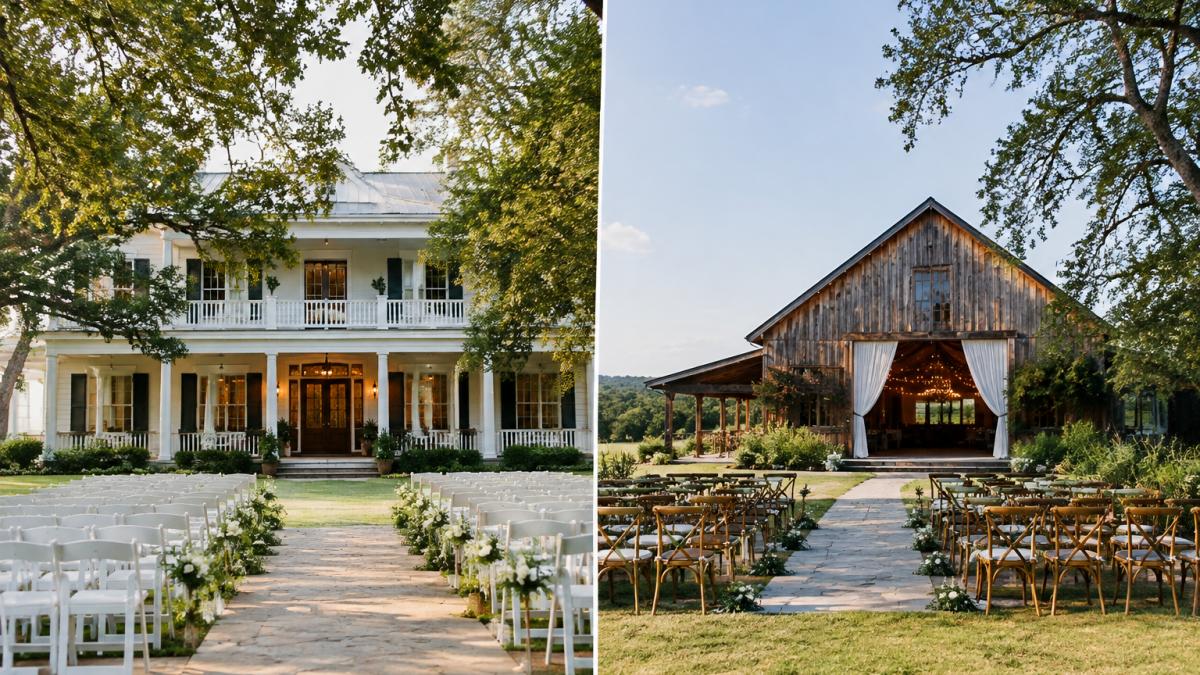
Choose outdoor spaces for ceremonies and cocktail hours when you want open landscape, mature oak trees and Texas sky views. Plan for indoor reception space if you expect heat, rain or wind, since Texas spring and summer weather can change quickly. Ask whether the indoor space is climate controlled and how it is set up for a reception. Many couples use a hybrid plan, with the ceremony outside and dinner inside, so a backup is ready if conditions shift.
What should you look for when touring a modern farmhouse wedding venue?
On a site visit, check how the indoor and outdoor spaces flow together, the condition of wood beams and finishes, and whether restrooms and parking are convenient for guests. Walk the route from parking to the ceremony location, and note accessibility for guests who use mobility aids. Ask how the space looks at your guest count, not just in photos. Bring a list of questions and a notebook so you can compare venues side by side later.
How do you plan for weather at an outdoor wedding venue?
Ask the venue exactly where guests will go if it rains, how long the indoor space takes to set up, and whether it is included in your booking. Build a timeline that allows for a quick move, and consider shade, fans or heaters for hot or chilly days. Rent or confirm backup lighting and seating so the indoor setup still matches your style. Discuss a weather policy in the contract so there are no surprises on the day.
What is the difference between a barn venue and a modern farmhouse venue?
A traditional barn venue often focuses on rustic, weathered character, while a modern farmhouse venue blends rural charm with cleaner lines, neutral palettes and updated comfort. Modern farmhouse spaces typically include contemporary amenities such as climate control, updated restrooms and flexible layouts. Both can offer open countryside and outdoor ceremony areas. Visit both styles in person to see which feels right for your guest count and personal taste.