 How-to
Rustic Wedding Venue Decor: A Step-by-Step Guide
Quick Summary
Rustic wedding venue decor works best when it builds on the room you already have, using its natural light, walls, and views rather than covering them up. Start by mapping each space, checking venue rules, and setting a budget before choosing what to rent, buy, make yourself, or skip.
- Map each indoor and outdoor space for focal points, light sources, walkways, power outlets and views.
- Ask your venue coordinator early about hanging items, open flames, outside vendors and removal times.
- Compare all-in rental totals, since delivery, setup and damage waivers are often billed separately.
- Use the rent, buy, DIY or skip rule based on quantity, matching needs, labor and reuse potential.
- Keep centerpieces under about 12 inches high so guests can see each other across the table.
Table of Contents
- Start With Your Venue's Existing Character
- Set a Budget and Decide What to Rent Versus DIY
- Plan Your Rustic Wedding Ceremony Decor
- Build Rustic Wedding Centerpiece Ideas That Fit Your Tables
- Light the Space by Time of Day
- Run DIY Rustic Venue Decor Without Losing Time or Quality
- Lock In Your Plan and Book Your Walkthrough at Five Oaks Farm
- Frequently Asked Questions
Start With Your Venue's Existing Character
Every rustic wedding venue starts with the room you already have. The best decor works with the venue's natural features, not against them. Your job is to build on the setting you have, not cover it up.
Before you buy a single candle or rent a single table, walk the property and take notes. Look at the light, the walls, the floors and the views. Then decide which features you want to highlight and which ones you want to soften.
Mapping Your Indoor and Outdoor Spaces
Map each space on paper or in a simple phone note. Mark where guests will sit, stand and walk. Mark where the ceremony happens and where the reception happens. Mark the spots that get the most natural light.
Use this quick checklist for each space:
- Focal point: What do guests look at first when they walk in?
- Light source: Where does natural light come from, and at what time of day?
- Walkways: Where will guests and vendors move?
- Power outlets: Where can you plug in string lights, speakers or heaters?
- Views: What is worth framing, like the oaks or the countryside?
Outdoor spaces need extra planning. Wind can blow away paper goods and tall centerpieces. Sun can warm up candles and florals fast. Plan for shade and sturdy, weighted decor.
Watch out: Lanterns and open flames can be a fire risk near dry grass or fabric. Check what the venue allows before you plan candle-heavy outdoor décor.
Checking Venue Rules Before You Bring Anything In
Ask your venue coordinator what you can bring, what you can hang and what you can set up. Many venues limit nails, tape on walls, open flames and outside vendors. Ask these questions early, so you don't fall in love with a decor idea you can't use.
Good questions to ask include:
- Can we hang signs, lights or fabric from the ceiling or beams?
- Are open flames or real candles allowed, or only battery candles?
- Can outside vendors like florists or rental companies set up on-site?
- What time can decor be delivered, and what time must it be removed?
- Who is responsible if something is damaged or left behind?
Write the answers down. Share them with your planner and any vendors you hire.
Set a Budget and Decide What to Rent Versus DIY
A decor budget is a set of trade-offs, not a single number. Start with the total you can spend on decor and rentals, then allocate it by category before you shop. Start with the total you can spend on decor and rentals, then allocate it by category before you shop, and hold back a contingency for delivery fees, damage waivers and last-minute additions.
What Things Actually Cost
Pricing for rentals, linens, lighting and centerpieces depends on quantity, dates, delivery distance and vendor, so request written quotes from several sources to compare. Delivery, setup and pickup fees are often billed separately from the rental subtotal, so ask for an all-in total.
A Decision Rule for Rent, Buy, DIY or Skip
Ask four questions for each item: How many do you need? Does it need to look identical across the room? Does it need delivery and labor? Will you use it again?
- Rent when you need large quantities, matched pieces, or delivery and labor, chairs, tables, linens, tableware, lounge furniture and lighting.
- Buy when the item is reusable, resellable, or cheaper in bulk than renting, plain glassware, battery candles, and simple vessels you can resell or reuse.
- DIY when the item is small, personal and low-risk, signs, table numbers, place cards, and simple greenery or dried-floral accents.
- Skip when the item adds cost or labor without changing how the room reads, elaborate favors, oversized props, and anything that needs a crew to move.
Price the Labor, Not Just the Materials
DIY only saves money if your time is free and the result looks finished. Count hours for sourcing, assembling, transporting and touching up, and compare that against the rental quote. A common pattern is that DIY signs and table numbers pay off, while DIY florals and large installations cost more in time and stress than a rental or a florist would. If a project needs more than a few hours per unit, rent it.
Watch out: Rental quotes often exclude delivery, setup, damage waivers and after-hours pickup, so compare the all-in total rather than the per-item rate, and confirm who pays for broken or missing pieces.
Track It in One Sheet
Keep a single budget sheet with columns for item, quantity, rent/buy/DIY, quoted cost, delivery and labor, and status. Update it as quotes come in, and note which items are refundable or resellable so you can recover part of the spend after the event. Build the contingency line before you book anything, not after.
The article suggests a simple way to decide whether each decor item should be rented, bought, made yourself, or skipped.
| Choice | Best for | Key condition |
|---|---|---|
| Rent | Large quantities, matched pieces, delivery and labor | Needs matched look across the room |
| Buy | Reusable, resellable or bulk-cheaper items | Useful again or resellable later |
| DIY | Small, personal, low-risk items | Only if time is not excessive |
| Skip | Items adding cost without changing the look | Needs a crew to move them |
Plan Your Rustic Wedding Ceremony Decor
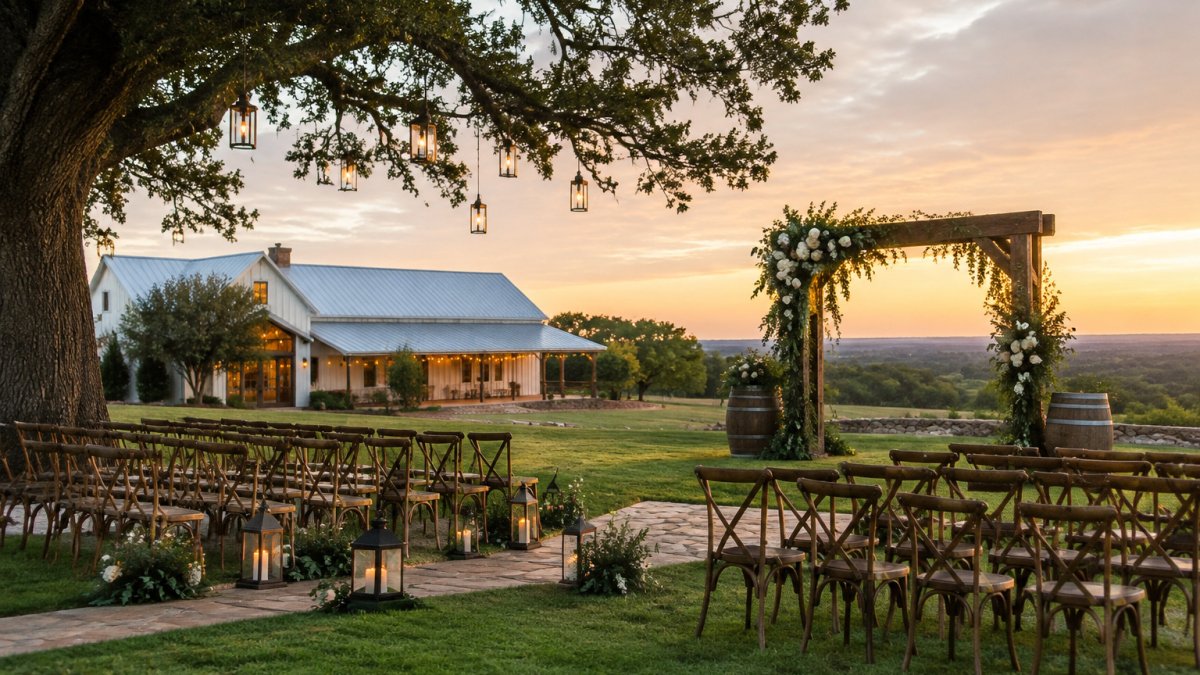
Ceremony decor sets the mood for the whole day. Keep the rustic wedding venue simple and focused on one or two strong features. A wooden arch, a floral backdrop or a row of lanterns along the aisle can do the job.
Natural materials work best for a rustic look. Think wood, greenery, burlap and cotton. Pick a color palette of three to four shades, such as cream, sage, rust and warm wood tones. Stick to it so the space feels cohesive.
Wildflowers and seasonal florals add texture without a lot of cost. Ask your florist what is in season for your wedding month. Simple bunches in mason jars can frame the aisle or ceremony table.
Build Rustic Wedding Centerpiece Ideas That Fit Your Tables
Centerpieces should fit the size of your tables and the number of guests. Tall centerpieces can block sight lines, so keep most designs under about 12 inches high for conversation.
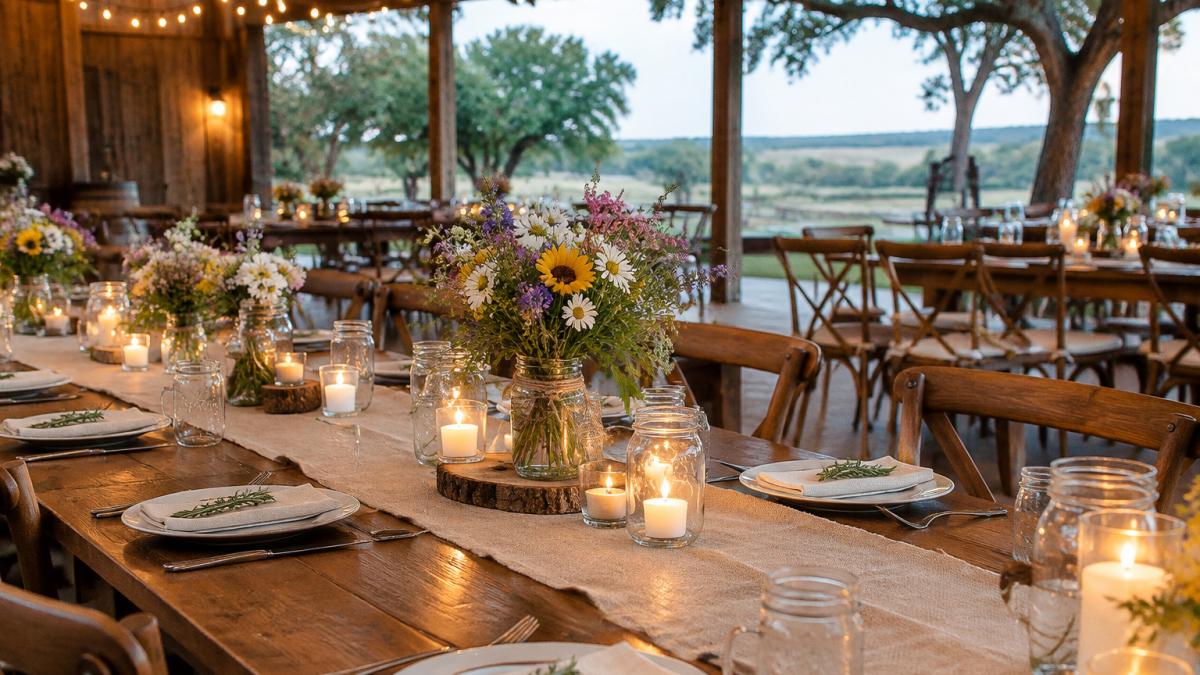
Good rustic centerpiece ideas include:
- Mason jars filled with wildflowers or greenery
- Small wooden crates holding candles and eucalyptus
- Galvanized buckets with seasonal florals
- Simple bud vases with single stems
Mix heights for visual interest. Put a few taller pieces at the ends of long tables and shorter pieces in the middle.
Light the Space by Time of Day
Lighting changes the feel of a rustic venue. Plan your lighting for the time of day your wedding happens.
- Daytime ceremony: Use natural light. Add a few lanterns in shaded areas.
- Golden hour: Let warm sunlight do the work. Place string lights so they glow as the sun sets.
- Evening reception: Layer string lights, candles and lanterns. Use warm white bulbs for a cozy look.
Check outlet locations early, since string lights need power. Battery candles are often allowed when real flames are not.
Run DIY Rustic Venue Decor Without Losing Time or Quality
DIY decor saves money, but it needs a plan. Set a deadline for each project, and finish the simplest items first. Try a test piece before you make thirty of them.
Keep a simple build schedule:
- Finish large items, like signs and arches, two to three weeks out.
- Make small table pieces one to two weeks out.
- Pack and label everything at least a few days before the wedding.
Ask friends or family to help with assembly. Hand out clear instructions, so every item looks the same.
Lock In Your Plan and Book Your Walkthrough at Five Oaks Farm
Your rustic venue decor plan works best when you know the space in person. Schedule a walkthrough to see the layout, light and natural features for yourself. Bring your sketch and your questions about rules and setup.
Review your packages and pricing, then book your tour. Five Oaks Farm offers a Hill Country feel in North Texas, so you can plan your ceremony and reception around the setting you love.
Frequently Asked Questions
How do you decorate a rustic wedding venue?
Start with the features the space already has, such as exposed beams, wood surfaces, oak trees and open countryside, then add decor that supports them rather than competing with them. Choose a limited palette of earthy tones, add textured linens, greenery and seasonal florals, and use warm lighting like string lights and lanterns. Map each zone of the venue, including the ceremony area, reception room and any indoor backup space, so the decor is planned for where guests will actually be. Confirm with your venue which items you can hang, stake or place before you buy anything.
How can you make rustic wedding decor look elegant?
Limit the number of rustic materials so each one has a clear role. Pair burlap or reclaimed wood with crisp white or cream linens, glassware and a single metallic accent such as brass candle holders. Keep florals in one or two colors and choose arrangements with clean lines instead of overflowing bouquets. Repetition helps too: using the same vase style across tables looks deliberate, while mixing five unrelated vintage pieces looks like clutter.
What are affordable rustic wedding decor ideas?
The most cost-effective choices are the ones that serve several purposes. Greenery and seasonal wildflowers from a local source cost less than imported stems, and mason jars, twine and wooden slices can be reused across the ceremony and reception. Renting a small number of statement pieces, like a ceremony backdrop, while doing the rest yourself lets you control spending. Pricing for rentals and supplies varies by quantity, date and vendor, so request written quotes and compare them against your own list.
What should you ask a venue before bringing your own wedding decorations?
Ask what you are allowed to attach to walls, beams and trees, whether open flames or candles are permitted, and what the setup and teardown windows are. Confirm whether outside vendors such as florists or caterers are allowed, when deliveries can arrive, and who handles trash and rental returns. Also ask about the indoor backup space in case of rain and whether you can access the venue for a walkthrough before the event.