 How-to
How Do You Plan a Rustic Wedding in Texas?
Last Updated: October 30, 2026
Quick Summary
Plan a rustic wedding in Texas by locking in your guest count, budget ceiling, season, venue, and core vendors first, then holding decorative details until later. Choose a venue with both indoor and outdoor rooms, and build a weather plan for the season you pick. Most couples follow a barn wedding timeline of about 12 months from booking to last dance.
- Lock in guest count, budget, season, venue, and core vendors before any decorative choices.
- Build the budget at your guest-count ceiling and hold 5-10% in a contingency line.
- Choose a venue with a real indoor room, not just a tent as a backup.
- Summer weddings need heat triggers like a late ceremony under 30 minutes and shade at the ceremony site.
- A barn wedding timeline runs about 12 months, booking the venue before the vendors.
Table of Contents
- Start With a Rustic Wedding Planning Checklist
- Build a Rustic Wedding Budget That Survives the Year
- Choose a Venue With Indoor and Outdoor Rooms
- Texas Outdoor Wedding Weather Tips for Every Season
- Set a Barn Wedding Timeline From Booking to Last Dance
- Book a Venue Tour at Five Oaks Farm
- Frequently Asked Questions
Start With a Rustic Wedding Planning Checklist
Planning a rustic wedding in Texas starts with separating what must be locked in first from what can wait. Couples who book the big pieces early and hold small details until later avoid stress and overspending.
Couples who sequence decisions tend to enjoy their engagement more, while those chasing every idea at once often burn out. Here is the order that keeps nothing important from slipping.
What to Lock In First
Lock these in before anything else:
- Guest count range. A firm number drives venue size, catering, and rentals.
- Total budget ceiling. Decide the number you will not cross.
- Season and month. In Texas, this choice shapes almost everything else.
A common mistake is touring venues before you know your guest count. You will fall in love with a space that cannot hold your list, or one that feels too big for an intimate crowd.
What Can Wait Until Later
These decisions can wait a few months without hurting you:
- Centerpieces, signage, and table linens
- Welcome bags and guest favors
- Rehearsal dinner details
Treat the rustic wedding planning checklist as a sequence, not a wish list: big commitments first, decorative choices last.
Build a Rustic Wedding Budget That Survives the Year
A rustic wedding budget works when you build it around fixed costs first, then let styling fill whatever remains. Most couples do this in reverse, which is why the final bill surprises them. Set a percentage allocation before you tour a single venue, then protect a contingency line all year. For real cost data on affordable rustic venues, see this guide to affordable rustic wedding venues in Texas.
Start With a Percentage Split, Not a Dollar Guess
Budget allocations vary widely by couple, so build your own split from written quotes rather than fixed percentages.
Put Real Numbers on the Big Three
Before you commit, get written quotes on the three lines that scale with guest count: catering, rentals, and beverage. Ask each caterer for a per-person price including service staff, tax, and gratuity. Ask the rental company for a delivered-and-set price. Ask about beverage in three forms: consumption bar, hosted bar with a cap, and beer-and-wine only.
Build the budget at your guest-count ceiling, not your hoped-for count. If your list could reach 150, price the wedding at 150. Anything under that is found money.
Where Rustic Weddings Quietly Overspend
Rentals can add up quickly at a bare site. Ask whether a venue already includes the furnishings and decor you need, so you can avoid buying them piece by piece.
Other quiet leaks:
- Buying decor you will never use again instead of renting
- Adding a tent "just in case" when the venue has indoor backup
- Paying for extra setup labor on items the venue already provides
Ask every venue one question: what is already here? Get the answer in writing, itemized, so you can compare it against rental quotes line by line. That protects your budget more than any coupon.
Protect a Contingency Line
Hold 5-10% of the total in a contingency line and do not spend it on upgrades. In a rustic setting, that money covers what actually goes wrong: extra heaters, a last-minute rental delivery, additional shuttle runs, or a weather-driven change that carries a fee. If it survives to wedding week, it becomes your honeymoon fund or vendor-tip pool.
Choose a Venue With Indoor and Outdoor Rooms
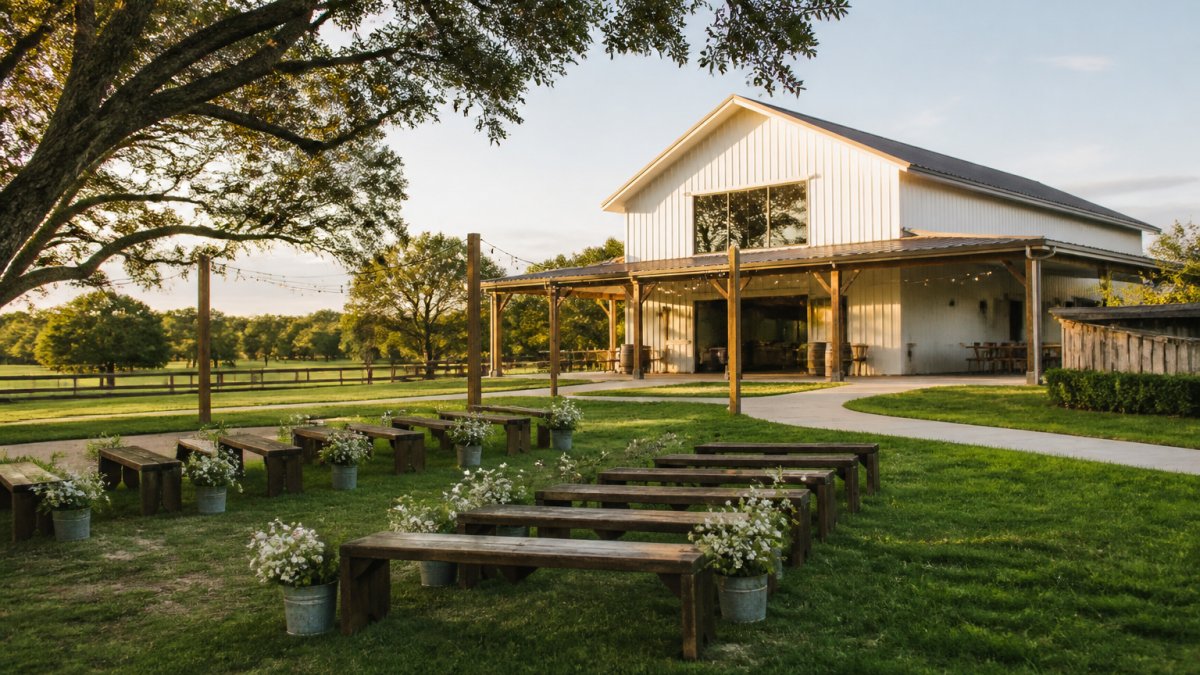
Look for a venue that offers both an outdoor ceremony space and a real indoor room, not just a tent as a backup.
When you tour, walk both spaces and picture your ceremony in each. Ask how the indoor room looks set for dinner.
If you are still weighing which setup suits your crowd, our guide on choosing between indoor and outdoor weddings walks through the questions to ask before you book.
Texas Outdoor Wedding Weather Tips for Every Season
Texas outdoor wedding weather tips come down to one rule: plan for the season you picked, and always have a room to fall back on. Heat, wind, and sudden storms are normal here, so a good plan beats a hopeful one.
Know the Seasonal Risk Before You Pick a Date
Season by season, here is what to plan around:
- Spring (March-May): Mild and green, but rain is common and severe-storm season peaks in April and May. Keep the indoor room ready and set a rain-call deadline.
- Summer (June-August): Heat is the risk, not rain. Plan a late ceremony, shade, water stations, and a cool indoor option. Afternoon heat index values routinely climb well above the comfort range for seated guests in formal attire.
- Fall (September-November): The most reliable window. Evenings cool off nicely, but early fall can still carry summer heat and late fall can bring cold nights. Plan for both.
Set Heat Triggers for Summer Weddings
For a summer date, decide in advance what heat does to your schedule. A workable set of triggers:
- Move the ceremony to the last hour before sunset and keep it under 30 minutes.
- Provide shade at the ceremony site, not just at the reception. Umbrellas, a shade structure, or a tree canopy all count.
- Station water and a cooling area at the ceremony entrance so guests can recover before they sit.
Put these triggers in writing with your venue and coordinator. A plan that lives only in your head will not survive a hot afternoon.
Build a Rain Plan You Actually Like
A rain plan should be a space you would happily use, not a tent in a parking lot.
Set a rain-call deadline well before the ceremony, and name the one person who makes the call.
Confirm what the indoor space looks like before you sign. Our wedding venue FAQ covers common questions about weather and rain plans.
Plan for Wind and Storms
Wind is the quiet problem in open settings. Lightweight decor, loose linens, and unweighted signage all move. Ask the venue how it anchors tents and arches, and plan weighted centerpieces and secured signage. For storms, know the venue's lightning policy and the nearest sturdy shelter, and build a communication plan so guests know where to go if the sky turns.
Give Guests a Weather Heads-Up
Add a line to your wedding website and a note in the welcome bag: what to wear, whether the ceremony is outdoors, and where to go if weather changes the plan. Guests who know the plan in advance move faster and complain less when it is used.
Set a Barn Wedding Timeline From Booking to Last Dance
A barn wedding timeline runs about 12 months for most couples, and the milestones matter more than the exact dates. Here is the sequence we recommend:
| When | What to Do |
|---|---|
| 12 months out | Set budget, guest count, season; book venue |
| 10 months out | Book photographer, caterer, coordinator |
| 8 months out | Send save-the-dates; book rentals and florals |
| 6 months out | Order attire; plan menu and cake |
| 4 months out | Send invitations; confirm vendor contracts |
| 2 months out | Final headcount; build day-of schedule |
| 1 month out | Confirm arrival times; final payments |
| Wedding week | Rehearsal, pack decor, hand off the plan |
Two things protect this timeline. First, book the venue before the vendors, since every vendor needs a date and address. Second, put one person in charge of the day-of schedule so you are not answering questions in your dress.
Book a Venue Tour at Five Oaks Farm
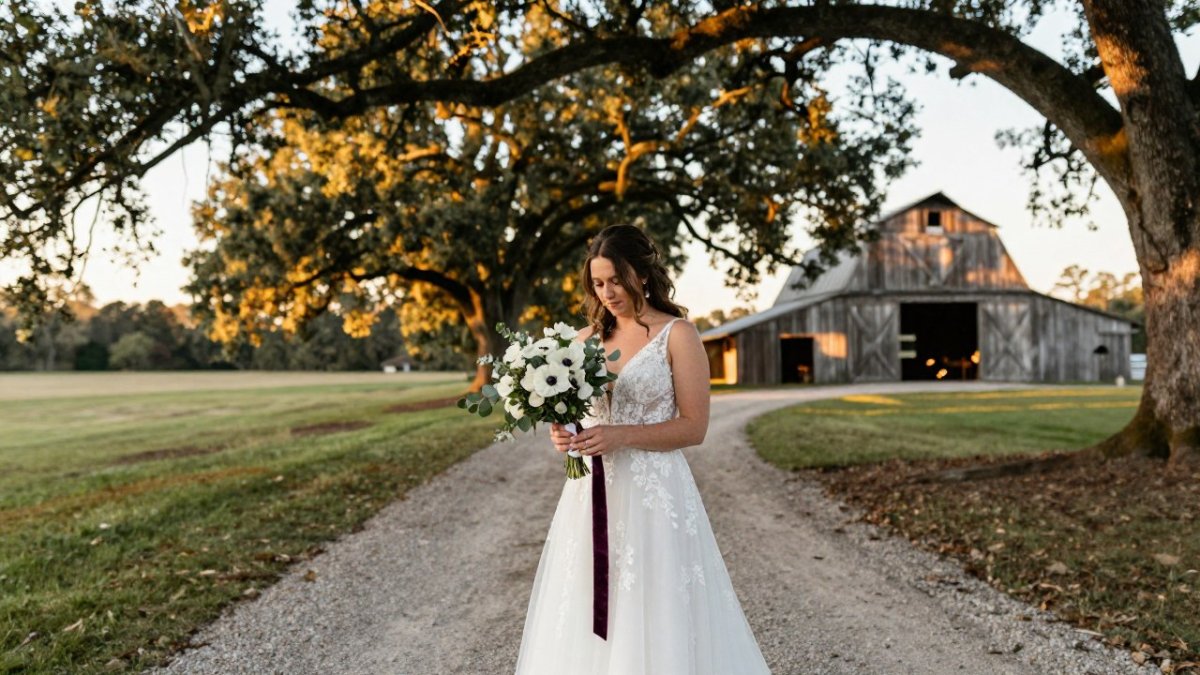
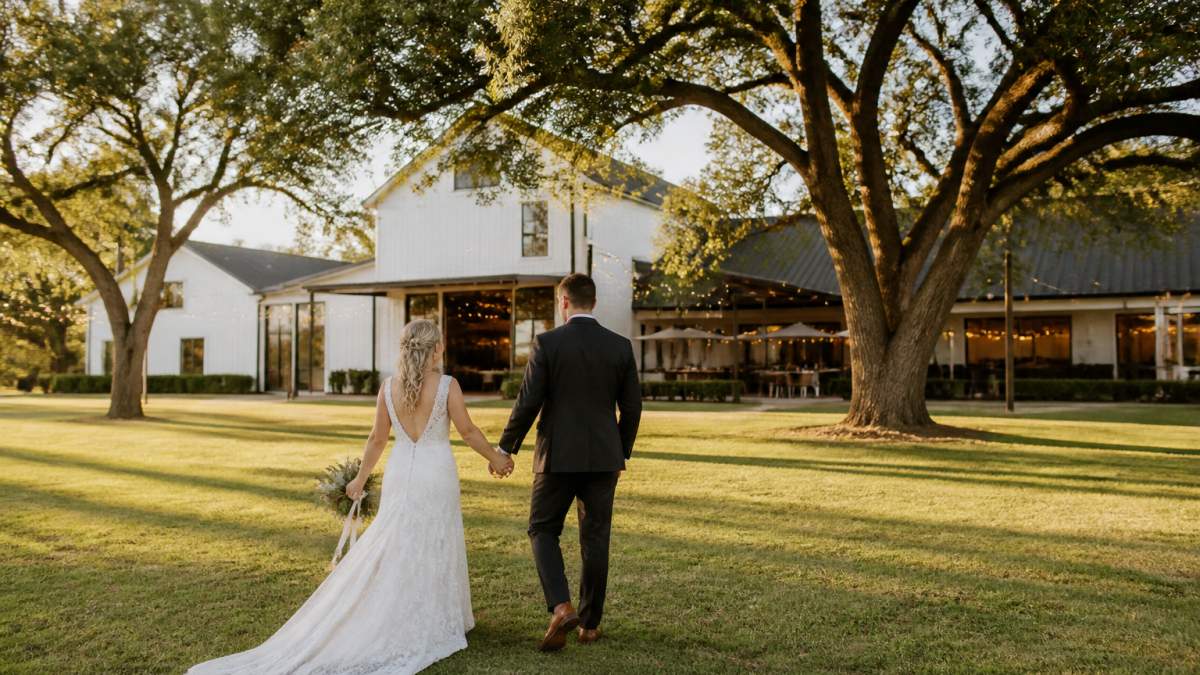
The fastest way to plan a rustic wedding in Texas is to stand in the space and see it for yourself. Five Oaks Farm offers a Modern Farmhouse-inspired setting with a Hill Country feel, mature oak trees, and both indoor and outdoor rooms for up to 150 guests.
Start by reviewing our wedding packages and pricing so you know what fits your budget. Then contact Five Oaks Farm to schedule a tour and walk the grounds with our team.
Frequently Asked Questions
How far in advance should you book a rustic wedding venue in Texas?
Most couples book a Texas rustic wedding venue 10 to 14 months out, especially for fall Saturdays, which go first. If you want a spring or fall date, start touring venues as soon as you have a guest count and a rough budget. Shorter timelines work for off-season dates and smaller guest lists, but your choice of vendors narrows fast. Tour with questions ready: rain backup space, vendor flexibility, parking, and what the package actually includes.
How much does a rustic wedding cost, and what should the venue be in the budget?
A realistic rustic wedding budget starts with the venue and works backward. Venue fees, catering, rentals, photography, and attire are the five biggest lines, so decide your venue number before you book anything else. Ask every venue for a written list of inclusions and add-ons, because outside rentals and service charges are where budgets slip. Pricing depends on guest count, date, and package, so request a current quote from Five Oaks Farm rather than estimating.
What should guests wear to a rustic wedding in Texas?
Tell guests the setting and the ground surface on your website or invitation insert. For a barn or farmhouse wedding, cowboy boots, block heels, and breathable fabrics work well, and a light layer helps once the sun drops. If the ceremony is on grass, note that in your FAQ so guests skip stilettos. For summer dates, suggest light colors and breathable materials, and mention whether the reception is indoors with air conditioning.
How do you keep guests comfortable at an outdoor wedding in Texas heat?
Schedule the ceremony for late afternoon, keep the ceremony short, and have water and shade waiting before guests sit down. Fans, a covered porch or tent, and a clear indoor space for the reception make the biggest difference. Build the barn wedding timeline so the outdoor portion happens after 5 p.m. in summer, and ask the venue about its indoor backup space.
Your wedding day should feel calm, not rushed. We built Five Oaks Farm around that idea, with a scenic countryside backdrop, flexible indoor and outdoor spaces, and a setting that already carries the rustic-chic look. Get started with Five Oaks Farm and book a tour to see your day take shape.